
BY BUSINESS REPORTER
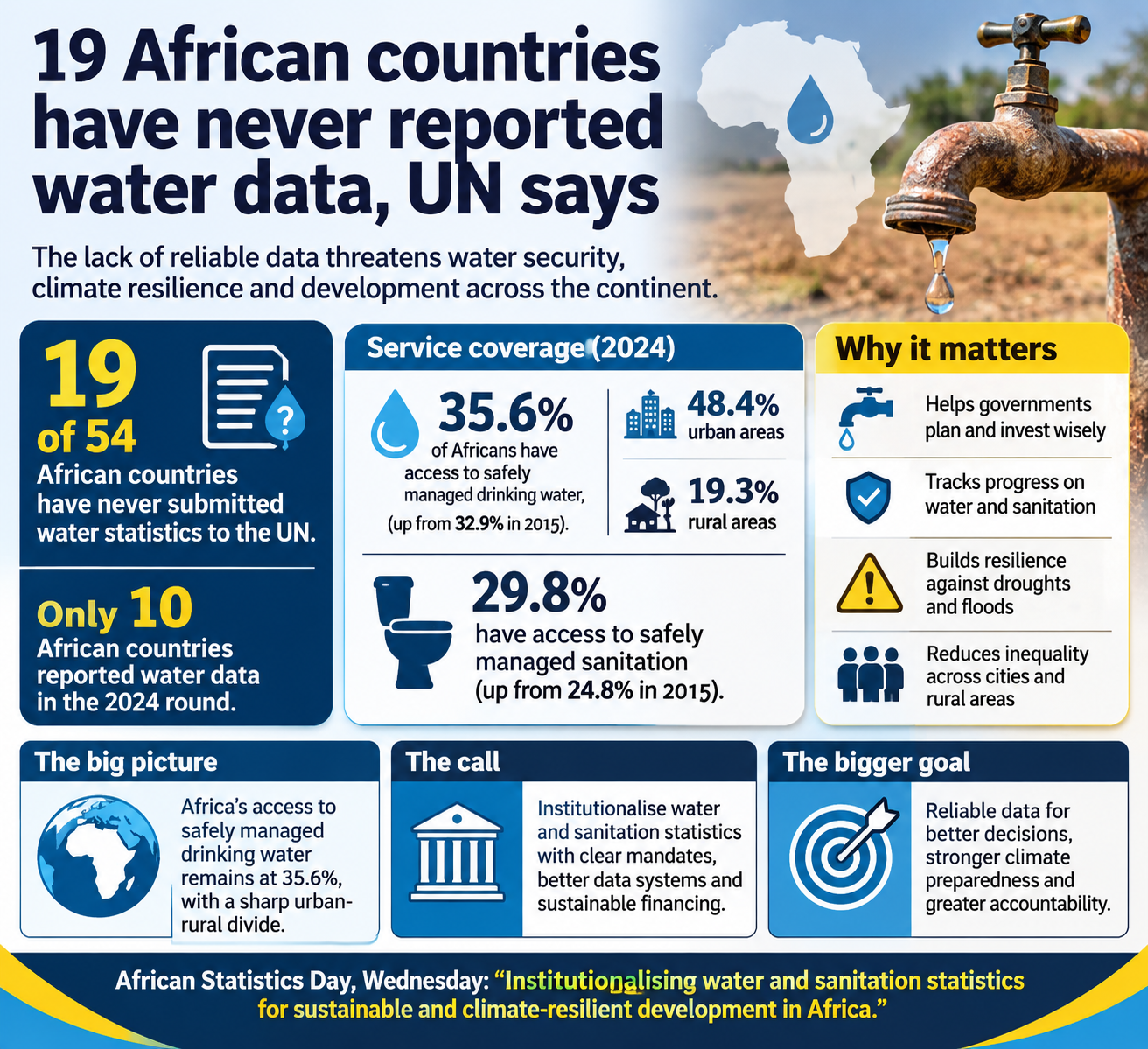
Nineteen of Africa’s 54 countries have never submitted water statistics to the United Nations, raising concerns about the continent’s ability to monitor access to safe drinking water, plan infrastructure investments and respond to growing climate-related threats.
The reporting gap highlights a wider weakness in Africa’s water governance: governments cannot effectively address shortages, inequalities or unreliable services without consistent, credible data. As climate change intensifies droughts and floods, institutionalising water and sanitation statistics is becoming increasingly important for tracking progress, directing resources and holding authorities accountable.
The findings come ahead of African Statistics Day on Wednesday, which this year is being commemorated under the theme “Institutionalising water and sanitation statistics for sustainable and climate-resilient development in Africa”.
The theme aligns with the African Union’s 2026 focus on securing sustainable water availability and safe sanitation to advance the goals of its Agenda 2063 development blueprint.
Service coverage has improved only modestly across the continent. In 2024, 35,6% of Africans had access to safely managed drinking water, up from 32,9% in 2015. However, the urban-rural divide remained substantial, with coverage at 48,4% in urban areas compared with 19,3% in rural communities.
Safely managed sanitation coverage also increased, reaching 29.8% in 2024, from 24.8% in 2015.
GAPS IN REPORTING
A statistical brief by the UN Economic Commission for Africa found that 19 of the continent’s 54 countries had never submitted water statistics through the UN Statistics Division and UN Environment Programme questionnaire on environment statistics.
Only 10 African countries reported water data in the 2024 reporting round.
According to an advisory issued ahead of African Statistics Day, the figures underscore the need for regular, nationally produced statistics to guide planning and measure progress.
It warns that differences in concepts, methodologies and reporting schedules across institutions can result in fragmented, inconsistent or outdated information, while national averages may conceal significant inequalities.
CLIMATE PRESSURE
Climate change is placing additional pressure on water resources through shifting rainfall patterns, prolonged droughts and increasingly severe floods, the advisory said.
“Decision makers therefore need statistics that show whether services are safe, reliable and affordable; where shortfalls and inequalities are greatest; which systems are exposed to climate and pollution risks; and whether investments are producing results,” it said.
Institutionalising water and sanitation statistics requires moving away from isolated surveys and short-term projects towards making data collection and use a permanent responsibility of national statistical systems.
This would require clear institutional mandates, common indicators, quality assurance mechanisms, sustainable financing, skilled personnel and responsible data-sharing arrangements.
The advisory proposes that countries begin by using records already held by water utilities, authorities and treatment plants before gradually developing comprehensive national water accounts.
It also recommends that governments clearly distinguish between nationally reported and modelled figures in published statistics, while explaining significant differences between national and international estimates.
Satellite data, sensors, geospatial tools and artificial intelligence could strengthen monitoring and early-warning systems, the advisory said. However, these technologies cannot replace capable institutions, agreed standards and reliable official statistics.
CALL FOR DISAGGREGATED DATA
National statistics offices are being encouraged to use African Statistics Day to bring together water and sanitation ministries, utility regulators, environmental and climate institutions, local authorities, basin organisations, researchers, civil society, young people, the private sector and the media.
The engagements should showcase available data, identify outstanding reporting gaps and secure practical commitments to address them.
The advisory also calls for statistics to be disaggregated by location, rural or urban residence, sex, age and income, where feasible.
It further recommends collecting information on the time spent fetching water and the effects of inadequate services on education, health, employment and personal safety.
Ultimately, the success of these commitments will be measured by whether better data translates into more informed investment decisions, reliable water and sanitation services, stronger climate and disaster preparedness, and greater public accountability, the advisory said.