Dairibord Holdings grew third-quarter revenue 22% to US$44,65 million as new production lines and strong demand lifted sales, but the dairy and beverages maker warned that rising input costs tied to Middle East tensions would squeeze margins.
BY BUSINESS REPORTER
Sales volume rose 18% from a year earlier to 41,58 million litres, with growth across all product categories, the company said in a trading update.
The results show Dairibord benefiting from a stable macroeconomic backdrop and recent capital spending, even as it contends with tight local-currency liquidity, constrained raw milk supply, intensifying competition and elevated fuel and packaging costs.
Growth slowed from the 26% pace of the first half. An extended cold spell in July dampened beverage sales, and scheduled downtime on the bottled Cascade production line also constrained performance, the company said.
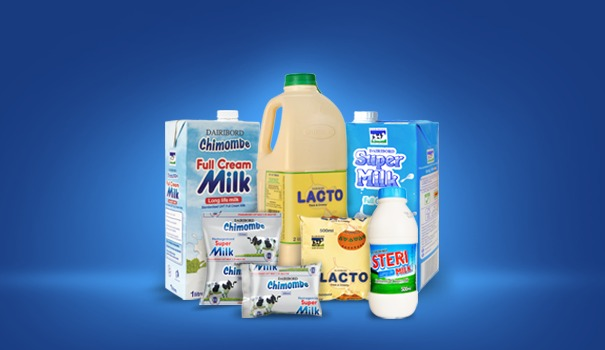
Beverages volume rose 20%, helped by recent investments in the bottled Cascade and Pfuko Maheu lines. Foods grew 18%, driven by demand for yoghurt and ice cream, while Liquid Milks rose 15% on higher throughput at the Chipinge Steri plant.
Beverages made up 66% of quarterly volume, followed by Liquid Milks at 24% and Foods at 10%.
For the nine months, sales volume increased 23% to 119,85 million litres, and revenue grew 26% to US$127,12 million. Beverages rose 28%, Foods 26% and Liquid Milks 10%.
Export volume fell 23% year to date as the company prioritised domestic demand. Dairibord said exports would become a key focus as capacity improves, both as a source of foreign currency and as a way to diversify risk.
Raw milk supply remained a constraint. Intake was unchanged from a year earlier at 11,8 million litres in the quarter and 32,1 million litres for the nine months, although the company said improved collections boosted Liquid Milks growth.
Dairibord described the quarter as one of macroeconomic stability, with inflation and the exchange rate holding steady.
Liquidity remained tight, particularly in local currency, because of central bank policies, it said. A strong 2025/2026 farming season supported rural liquidity and food security.
Production faults and prolonged downtime at some sites hurt operating efficiency, while competition intensified from new market entrants, informal domestic players and imports.
Looking ahead, the company expects new investments to support volume growth in the fourth quarter, along with improved raw milk intake from large commercial farmers. It said persistent Middle East tensions would push up costs for petroleum-based packaging and for freight on imported materials.
To protect margins, management is pursuing cost-efficiency measures, including utility self-sufficiency.
“Additionally, the commercialisation of our innovation pipeline from the fourth quarter through to Q1 2027 will support market share gains,” the company said.