BY KANAYO AWANI
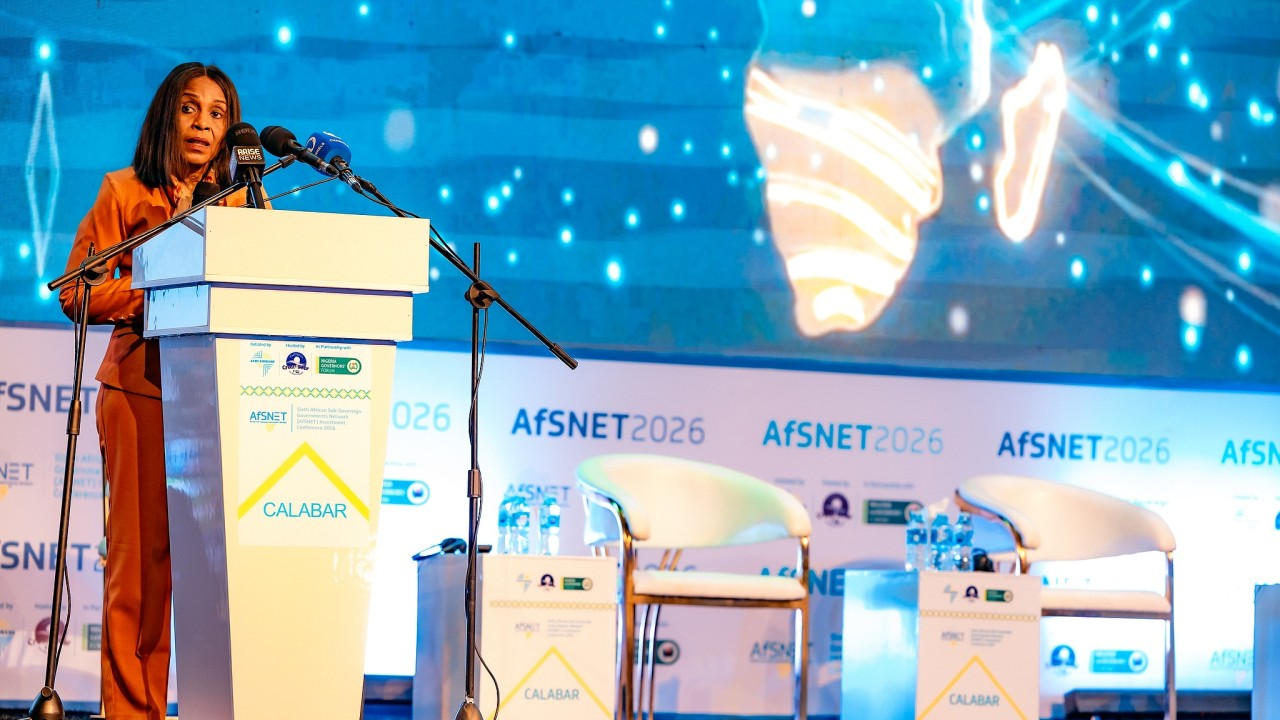
Nations negotiated the AfCFTA. Sub-sovereigns will bring it to life – That was my central message at the sixth African Sub-Sovereign Governments Network Investment Conference (AfSNET) in Calabar, on delivering the African Continental Free Trade Area (AfCFTA) in practice.
AfSNET drew more than 1 200 delegates from 15 countries, including 25 sub-sovereign governments or their representatives, and the projects and deals discussed exceeded US$4,5 billion.
It confirms AfSNET as a strategic platform for intra-African trade, investment and industrialisation.
Returning to Calabar was personally meaningful: I completed my secondary education at Federal Government Girls’ College here.
For centuries, the city was a gateway between the hinterland and international markets; today it can play a renewed role in an Africa trading more with itself.
The AfCFTA provides the continental framework, but its impact will be determined within Africa’s states, provinces, counties and cities, where land is allocated, permits are issued, industrial parks are established, and investment becomes jobs.
Sub-sovereign governments must therefore become active drivers of Africa’s integration.
This begins with making jurisdictions investable through clear land titles, transparent permitting, consistent policies and the rule of law, backed by a pipeline of bankable projects with feasibility studies, legal structures, financial models and credible procurement.
African Export-Import Bank (Afreximbank) is helping close this gap through its Project Preparation Facility and the US$2 billion committed in 2023 for AfSNET members’ trade and investment financing needs.
In Cross River State, we are advising on the Bakassi Deep Seaport and its proposed 217-kilometre superhighway, and across Africa we are supporting industrial parks, special economic zones and border corridors.
Projects must connect into regional systems. The proposed link between the Lagos-Calabar Coastal Highway, the Bakassi Deep Seaport, the Calabar and Tinapa free zones, Cameroon and the wider CEMAC market shows how sub-sovereign projects become building blocks of continental trade. I was pleased that the Bakassi Deep Seaport broke ground on the sidelines of AfSNET.
Against this backdrop, I shared five priorities for accelerating delivery:
1. Make jurisdictions investable.
2. Strengthen institutions for project preparation and implementation.
3. Specialise according to comparative advantage and trade with one another.
4. Plan in corridors that connect production centres, infrastructure and markets.
5. Use existing tools: AfSNET, the Africa Trade Gateway, Pan-African Payment & Settlement System and the Intra-African Trade Fair.
The priority now is implementation that delivers measurable outcomes in production, trade and employment.
Afreximbank stands ready to deepen this work with sub-sovereign governments across Africa and the Caribbean.
The seventh AfSNET will be held on the sidelines of Intra-African Trade Fair IATF2027 in Lagos, from November 5 to 11, 2027, giving Africa’s sub-sovereigns a unique opportunity to turn commitments into concluded deals.
We look forward to receiving bankable deals from all sub-sovereign stakeholders.
Let us build the corridors together.
Kanayo Awani is Executive Vice-President, Intra-African Trade and Export Development at Afreximbank