Tunisia will host the 2027 edition of Biashara Afrika, the African Continental Free Trade Area (AfCFTA) Secretariat’s flagship business forum, Tunisian Foreign Minister Mohamed Ali Nafti said.
BY BUSINESS REPORTER
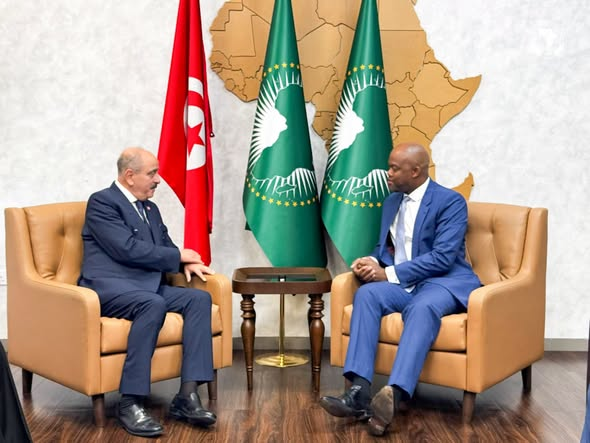
Nafti announced this during a meeting with AfCFTA Secretary-General Wamkele Mene at the secretariat in Accra.
The forum brings together policymakers, business leaders and investors to promote trade between African countries.
That trade rose 5,47% in 2025 to US$213,8 billion from US$202,7 billion a year earlier, according to the African Trade and Economic Outlook 2026 report.
Fifty countries have ratified the AfCFTA and 26 trade under its preferential rules.
The two officials also discussed Tunisia’s national plan for implementing the agreement. Nafti invited Mene to the Tunisia Africa Business Meeting in Tunis on December 9 to 10.
This year’s forum was held in Lomé, Togo, on May 18-20 under the theme “Powering Africa’s Economic Transformation through the AfCFTA”.
More than 1 900 people attended in person, the highest turnout to date.
Participants welcomed Togo’s announcement that African nationals with valid passports can enter the country without a visa.
The AfCFTA is the world’s largest trading bloc by number of countries, covering more than 1 billion people with a combined gross domestic product of more than US$3,4 trillion.
The World Bank has said the pact could lift about 100 million Africans out of poverty and add US$450 billion to the continent’s GDP by 2035.
Total African trade reached about US$1,4 trillion in 2025, and the report projects a 10% rise in 2026. It projects intra-African trade will reach US$230 billion in 2026.
The report attributed the growth in intra-African trade to improved implementation of the AfCFTA, rising regional demand and better trade facilitation.
South Africa remained the largest contributor to intra-African trade in 2025 with a 19,2% share, down from 20,8% in 2024.
Its exports to the continent were US$31,1 billion, unchanged from the previous year, while imports from African countries were US$10,04 billion.
Mineral fuels, metals and primary commodities still account for most of the value of intra-African trade, the report said, although manufactured and semi-processed goods took a bigger share in 2025.
It described this as a gradual shift away from commodity dependence toward greater diversification.
The continent also faces a trade finance gap estimated at US$80 billion to US$120 billion a year, the report said, driven by limited risk-bearing capacity in domestic financial systems, high transaction costs, weak credit information systems and elevated sovereign and counterparty risk.