
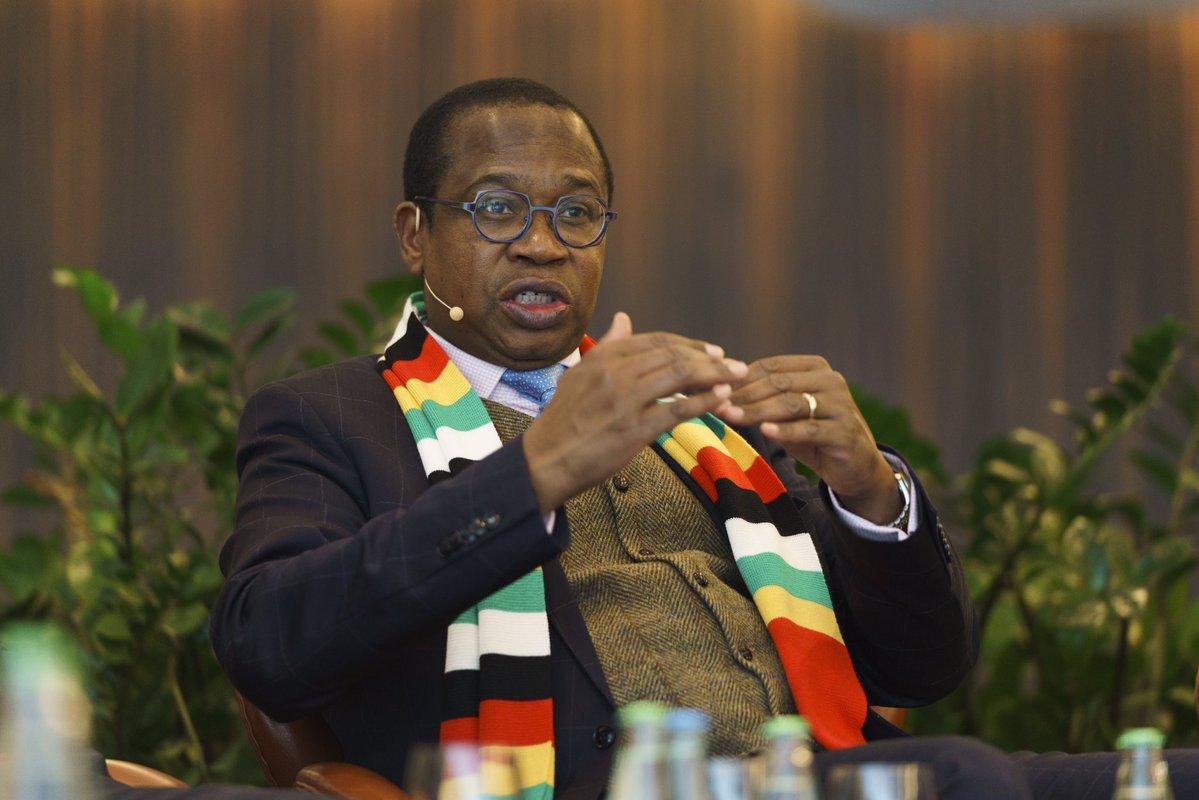
Zimbabwe’s Finance minister Mthuli Ncube on Thursday cut a tax on electronic money transfers for the second year running in his 2027 budget presentation, but stopped short of abolishing it as the banking industry had urged.
BY BUSINESS REPORTER
It was not immediately clear how the government would make up the lost revenue.
Last year, value-added tax was raised by half a percentage point to 15,5% to offset revenue forgone from the cut.
The Confederation of Zimbabwe Industries (CZI) had argued that a cut need not reduce collections if the economy is growing, noting that collections from the tax rose 7% in the first half of 2026 from a year earlier.
Ncube reduced the intermediated money transfer tax (IMTT) to 1,25% from 1,5% on transactions in the local Zimbabwe Gold (ZiG) currency, and to 1,75% from 2% on foreign currency transactions.
Last year’s budget cut the ZiG rate from 2% to 1,5% and left the 2% levy on US dollar transactions unchanged, so the local-currency rate has fallen by a cumulative 0,75 percentage points over two budgets.
The Bankers Association of Zimbabwe had pushed for abolition, saying the tax hinders the growth of the banking sector and fuels informal trade and tax evasion.
It had proposed a tiered structure, with lower rates for productive-sector transactions, value-chain payments and other strategic economic transactions.
The CZI had proposed a reduction, arguing that lower rates can lift collections from other taxes, including corporate tax.
The cut comes as Ncube sets a 2027 spending ceiling of ZiG358,3 billion, or about US$12,8 billion, against projected revenue of ZiG349,5 billion, or about US$12,5 billion.
Ministries, departments and agencies had submitted spending bids of ZiG974 billion, almost three times the ceiling.
The 2027 budget includes a contingency of ZiG10,9 billion (US$400 million), or 0,6% of GDP, as a precaution against more severe shocks, especially the expected super El Niño drought.
It will be financed from government buffers accumulated in 2026, Ncube said.
Ncube also proposed raising the personal income tax-free threshold from US$100 to US$150, or the ZiG equivalent, and adjusting the corresponding tax bands for 2027.